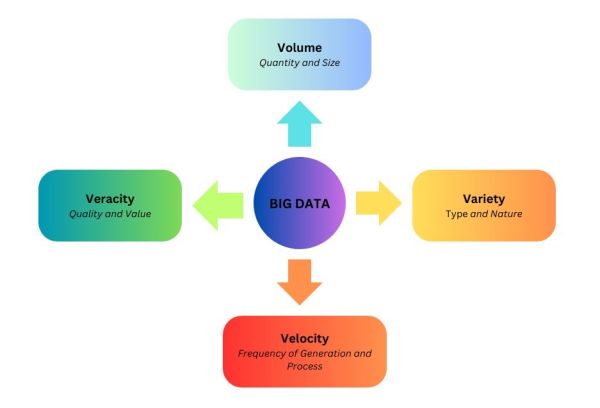
What is Big Data? Large amount of data which is impossible for traditional data processing and management systems to handle effectively. Examples of traditional systems could be RDBMS, On-Premises Data Centers, Traditional batch processing systems, etc. Big Data is mainly characterized by four V's as follows: (A) Volume - 2.5 Quintillion (2,500,000,000,000,000,000) Bytes of data... Continue Reading →
SQL Learning Resources
Learn sql for free and earn 10X salary growth. Yes it possible. Here are the 6 best free resources for learning SQL for free -- --Khan Academy -https://lnkd.in/gCZ5fS7x--SQLZoo - https://sqlzoo.net/--Codecademy - https://lnkd.in/gWyMTS-G--SQLBolt - https://sqlbolt.com/--Udacity - https://lnkd.in/gxpBMteQ--SQL for Web Nerds - https://lnkd.in/gRPT3P5X
Pyspark Basic questions
Q1. What is PySpark?PySpark is the Python API for Apache Spark. It is an open-source distributed system that is used for big data processing. Q2. What is the difference between RDD, DataFrame, and Dataset in PySpark?Resilient Distributed Datasets is a basic data structure in PySpark. It represents a distributed collection of objects. The Dataset is... Continue Reading →
ADVANCED GCP QUESTIONS AND ANSWERS
1.How can you create a new virtual machine instance on Google Cloud Platform using the gcloud command-line tool? Here are the steps to create a new virtual machine instance on Google Cloud Platform using the gcloud command-line tool. Open your terminal or command prompt.Make sure you have the gcloud command-line tool installed and configured on... Continue Reading →
INTERMEDIATE GCP QUESTIONS AND ANSWERS
Why does Google Cloud Platform differ from other services? Google Cloud Platform (GCP) has a number of distinct characteristics and features that differentiates it from other cloud services: Google-grade Security: GCP uses the same robust architecture and security model Google uses for its own products like Gmail and Search. Advanced Data Analytics and Machine Learning:... Continue Reading →
Basic GCP questions and answers
What are the many levels of cloud architecture? The following are the many layers of cloud architecture: Physical Layer: This layer contains the network, physical servers, and other components.Infrastructure layer: This layer includes virtualized storage levels, among other things.Platform layer: This layer consists of the applications, operating systems, and other components.Application layer: It is the... Continue Reading →
Data Warehouse, Datalake, Datamesh
Data is the lifeblood of any modern business. But with so much data available, it can be difficult to know how to store, manage, and analyze it effectively.That's where data warehouse, data lake, lakehouse, and data mesh come in.1. **Data Warehouse:**- 📂 Structured Data: Designed primarily for structured data storage.- 📊 Analytical Focus: Optimized for... Continue Reading →
Apache Spark Learning Resources
♐️Apache Spark for data engineers is like SQL is for relational databases. Just as SQL is a standard language used to interact with and manipulate data in relational databases, Apache Spark provides a powerful framework for processing and analyzing data in a distributed computing environment. With Apache Spark, data engineers can perform complex data transformations,... Continue Reading →
Cloud Resources
☁️ Cloud whispers secrets of data, and in the hands of engineers, it becomes a symphony of insights that reshape the world.🔰From big data being the most demanding technologies today the demand for cloud such as AWS, GCP or Azure is high, with changing times to have multi-skilled professionals.✔️Talking about what a data engineer must... Continue Reading →